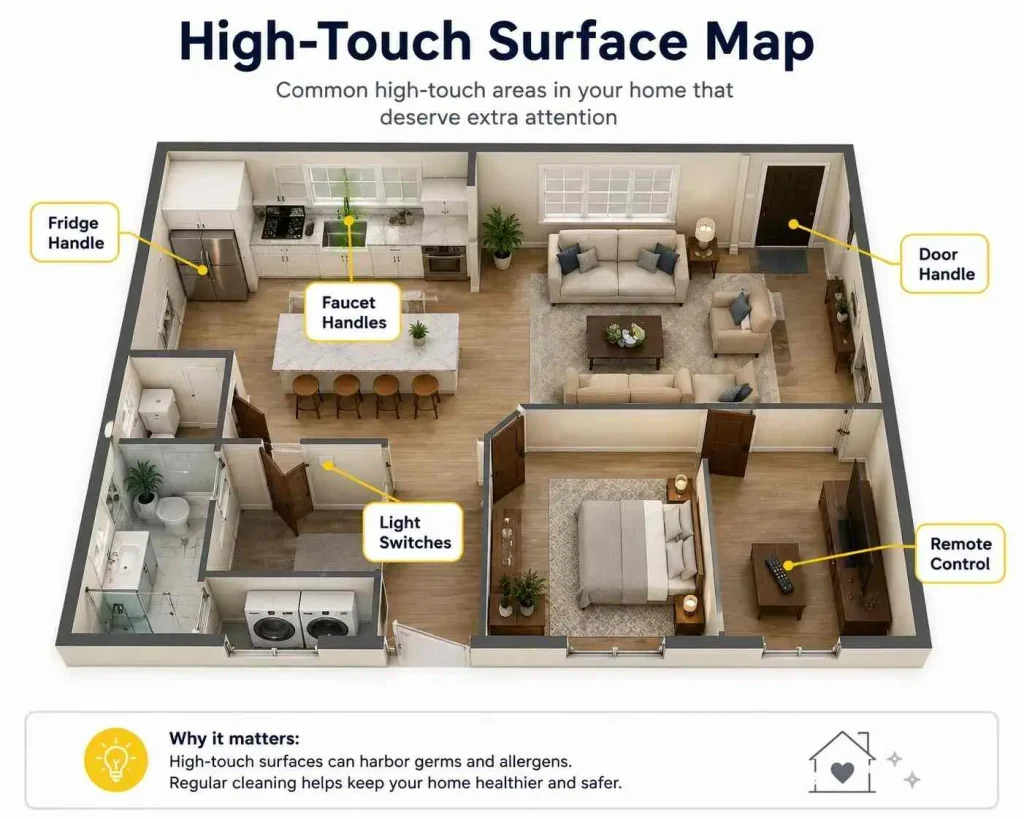
High-touch surfaces are areas like door handles, light switches, faucet handles, remote controls, and cabinet pulls that are contacted many times daily by everyone in the household. They carry a higher risk of spreading bacteria and viruses than larger surfaces because of frequent shared contact. Cleaning removes visible dirt, but disinfecting with an EPA-approved product is required to kill the pathogens that remain. Daily attention to these surfaces is the most effective way to reduce illness transmission within a home.
What High-Touch Surfaces Actually Are
The Definition Is Simpler Than You Think
A high-touch surface is any surface that multiple people contact frequently throughout the day. The key factors are frequency and shared contact, not size or visibility.
A bathroom tile wall covers more square footage than a light switch. But a light switch gets touched by every person in the house every single day, often with unwashed hands. The tile barely gets touched at all. Which one carries more risk? The light switch, by an enormous margin.
The Most Overlooked Ones in Raleigh Homes
Most homeowners clean countertops and toilets regularly. What they miss are the surfaces touched constantly but cleaned almost never.
- Light switches in every room, including bathrooms and kitchens
- Door handles and knobs throughout the home, especially the front door and refrigerator
- Faucet handles in kitchens and bathrooms
- Remote controls, game controllers, and TV buttons
- Stair railings
- Cabinet and drawer pulls in the kitchen
- Phones and tablets brought into every room of the home
- Toilet flush handles
High-touch surfaces are more likely to harbor germs, including bacteria and viruses, due to frequent contact. It is best to disinfect high-touch surfaces at least once a day. Most households do it far less often than that.
Why These Surfaces Matter More Than Most People Realize
Bacteria and Viruses Survive Longer Than You Expect
Viruses and bacteria can live on surfaces from hours to months and still be active. The best line of defense against spreading these diseases is regular cleaning and disinfection.
That range matters. A cold virus on a door handle does not disappear when the sick person leaves the room. It waits. The next person to touch it transfers it to their hands, and from there to their face, eyes, or mouth. This is how illness spreads through households, not just through the air, but through the surfaces everyone shares.
Cleaning and Disinfecting Are Two Different Things
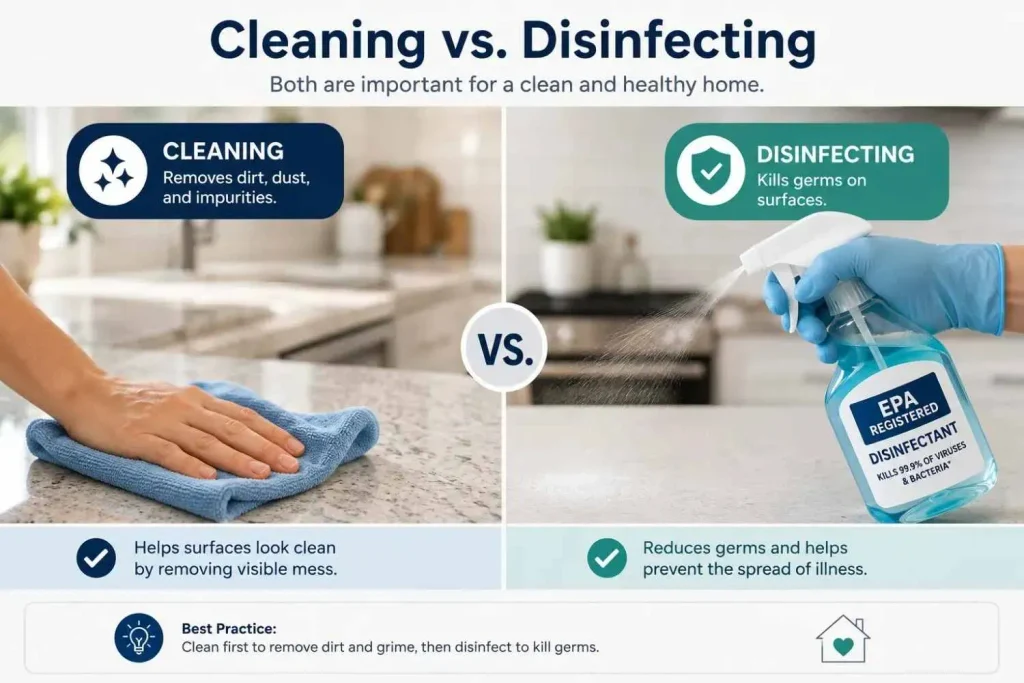
This is the distinction most homeowners miss, and it matters significantly.
Cleaning is the act of physically removing germs and bacteria from a surface, while disinfecting is the act of killing the germs and bacteria that remain. Cleaning agents are capable of removing up to 97 percent of the germs from a given surface. That remaining 3 percent is where disinfecting comes in.
Wiping a light switch with a damp cloth cleans it. Using an EPA-approved disinfectant at the correct contact time kills what remains. For high-touch surfaces that carry real illness risk, both steps are necessary, not one or the other.
Cross-Contamination Happens Faster Than You Think
Cross-contamination occurs when a dirty sponge or cloth is used to wipe a surface, spreading more germs than it removes. Touching a contaminated doorknob and then rubbing your eyes or mouth can introduce bacteria directly into your system.
The cleaning tools themselves become vectors if they are not managed properly. Using the same cloth to wipe the toilet handle and the kitchen faucet transfers contamination between the two. This is why professional cleaning services use color-coded microfiber systems and separate tools for bathrooms and kitchens.
The Raleigh Household Reality
Busy Homes Mean Higher Surface Contact Rates
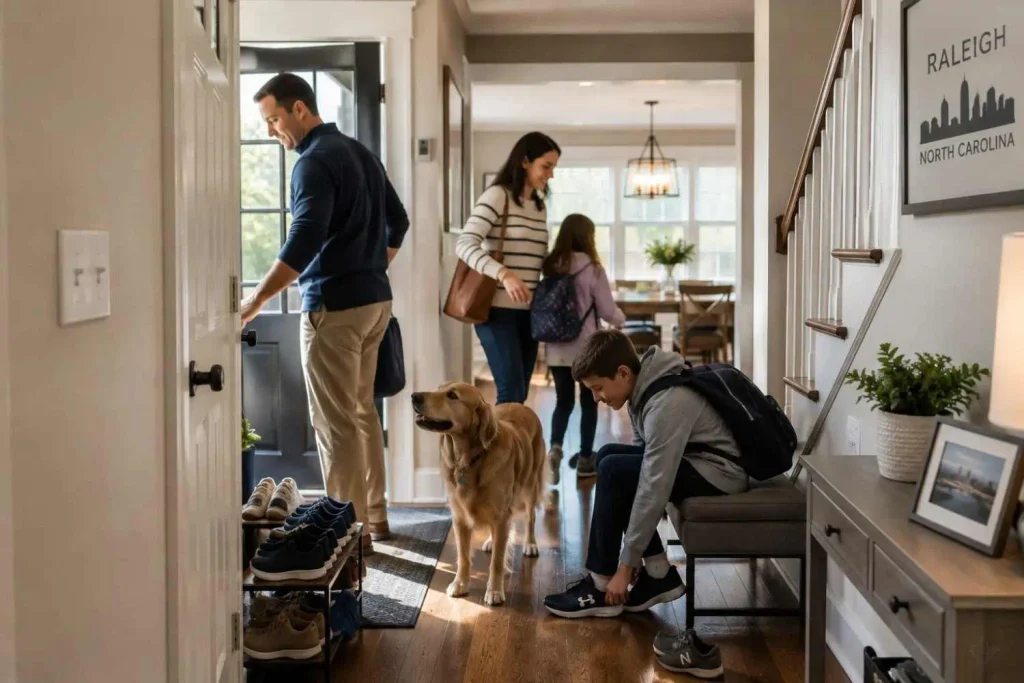
Raleigh’s growth has brought a significant number of dual-income households, busy families, and professionals whose homes see high daily activity. More people in and out of the home means more contact cycles on every shared surface. A light switch touched 20 times a day in a quiet household gets touched 60 or 80 times a day in a home with kids, visiting family, or regular guests.
During Raleigh’s flu season, which typically runs from October through March, and during spring when seasonal illness circulates through schools and offices, that contact rate on high-touch surfaces becomes a direct pathway for illness to move through households.
Pets Add Another Layer
Raleigh is an exceptionally pet-friendly city. Dogs coming in from outdoor walks in the Research Triangle area bring pollen, dirt, and outdoor bacteria in on their paws and coats. Those contaminants transfer to floors, furniture, and the hands of everyone who pets them. In a home with pets, high-touch surfaces carry a combination of human and environmental contaminants that require more frequent attention than the standard household.
What a Proper High-Touch Surface Cleaning Routine Looks Like
Daily
Door handles, light switches, faucet handles, toilet flush handles, and kitchen cabinet pulls should be wiped with a disinfectant daily in active households. This does not require a deep clean. A targeted pass with an appropriate product takes minutes and eliminates the most active contamination pathways in the home.
Weekly
Remote controls, stair railings, phones, tablets, and appliance handles should be addressed weekly as part of a complete cleaning routine. These surfaces see heavy use but are more protected from outside contaminants than entry points like door handles.
During and After Illness
When anyone in the home is sick, the frequency for every high-touch surface should increase immediately. In areas with high traffic or during illness, more frequent disinfection is necessary. Use a disinfectant that is EPA-approved and effective against a broad spectrum of bacteria and viruses. The goal is to break the chain of transmission before other household members are exposed.
What Gets Missed in a Standard Clean
A standard weekly clean focuses on what is visible: floors, countertops, toilets, and sinks. That is the right foundation but it leaves the highest-risk surfaces in the home largely untouched.
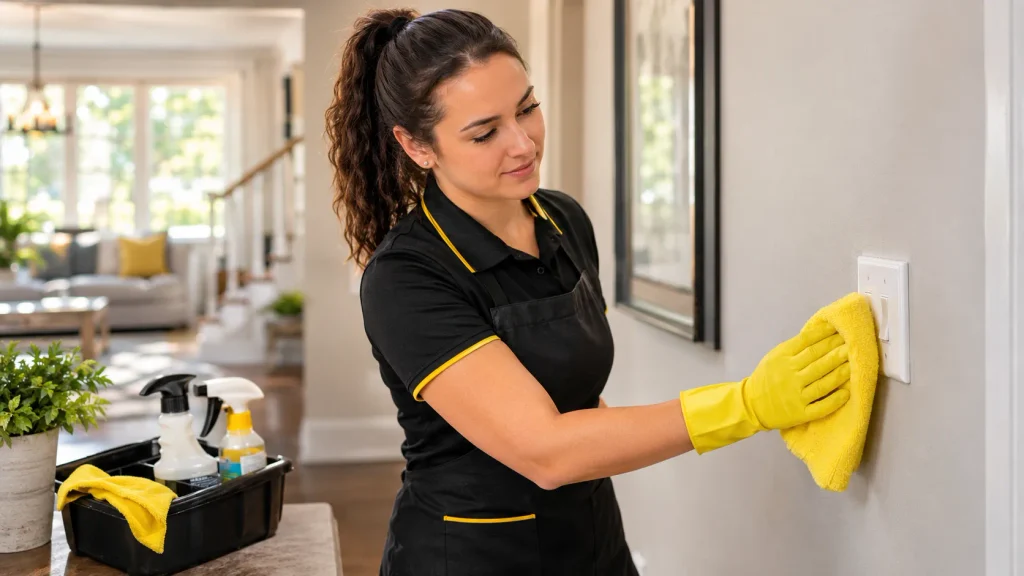
Smell Home Sweet Home includes dedicated attention to high-touch surfaces as part of every professional cleaning visit in Raleigh. Light switches, door handles, cabinet pulls, faucet handles, and toilet flush levers are disinfected on every visit, not left for a quarterly deep clean that is months away. The team uses EPA-approved disinfectants suited to each surface type, and separate tools are used in bathrooms and kitchens to prevent cross-contamination between rooms.
For Raleigh families who want a home that is genuinely clean and not just visually clean, that distinction is exactly what makes a professional service worth it.
Call Smell Home Sweet Home at (877) 658-5887 or get a free quote online. High-touch surfaces should be the first thing cleaned, not the last thing remembered.
Frequently Asked Questions
What are the most important high-touch surfaces to clean at home?
Door handles, light switches, faucet handles, toilet flush handles, remote controls, and kitchen cabinet pulls are the highest priority. These surfaces are touched multiple times daily by everyone in the household and are often completely skipped in routine cleaning.
How often should high-touch surfaces be disinfected?
High-touch surfaces should be disinfected at least once a day in active households, and more frequently during illness or high-traffic periods. Weekly cleaning is the minimum for lower-contact surfaces like remote controls and stair railings.
What is the difference between cleaning and disinfecting?
Cleaning removes visible dirt and most surface bacteria. Disinfecting kills the remaining pathogens that cleaning alone leaves behind. Both steps are necessary on high-touch surfaces because cleaning removes the debris that would otherwise prevent a disinfectant from working properly.
Do professional cleaners actually clean high-touch surfaces?
Quality professional services include high-touch surfaces in every visit. Ask specifically what surfaces are covered before booking. Smell Home Sweet Home treats door handles, light switches, faucet handles, cabinet pulls, and toilet hardware as standard items on every Raleigh cleaning visit.
Are high-touch surfaces more important to clean than bathrooms and kitchens?
They are equally important for different reasons. Bathrooms and kitchens carry sanitation risk from moisture, food contact, and waste. High-touch surfaces carry transmission risk because they move contamination from person to person throughout the entire home. A complete clean addresses both.
Leave a Reply