
Dust builds up faster in Raleigh offices because of the city’s spring pollen season and year-round humidity, which cause particles to settle and cling to surfaces more quickly than in drier climates. The most effective methods for reducing office dust include using microfiber cloths instead of cotton, cleaning in a top-to-bottom sequence, replacing HVAC filters on a 30-day cycle during pollen season, maintaining entrance mats daily, and scheduling quarterly deep cleaning of air vents, ceiling fans, and hard-to-reach surfaces.
Understanding why dust builds up the way it does in Raleigh is the starting point for controlling it effectively.
Why Standard Office Cleaning Misses Most of the Dust
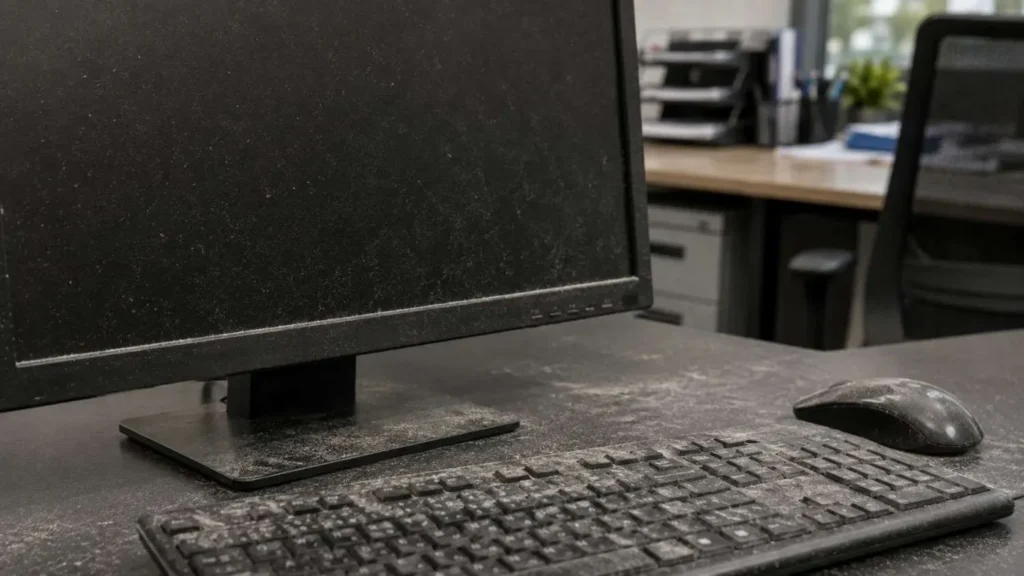
Visible Surfaces Get Cleaned, Problem Areas Do Not
Most office cleaning routines cover desks, floors, and restrooms. The areas where dust accumulation actually compounds over time are different entirely.
Air vents and return grilles pull dust-laden air through the HVAC system and deposit particles on the surrounding ceiling and wall surfaces continuously. Ceiling fan blades in conference rooms and break areas collect visible layers of dust within days of being cleaned. Baseboards and window tracks gather fine particles that a mop or vacuum misses completely unless the cleaning routine specifically includes them.
A routine that only addresses visible surfaces leaves the highest-accumulation areas untouched. That is why offices that are cleaned weekly can still develop a dusty appearance and air quality complaints within a matter of days after each visit.
HVAC Systems Distribute Dust Throughout the Entire Office
This is the mechanism most office managers do not consider. When a clogged HVAC filter continues to run, it no longer traps incoming particles effectively. Those particles circulate through the ductwork and settle on every horizontal surface in the office.
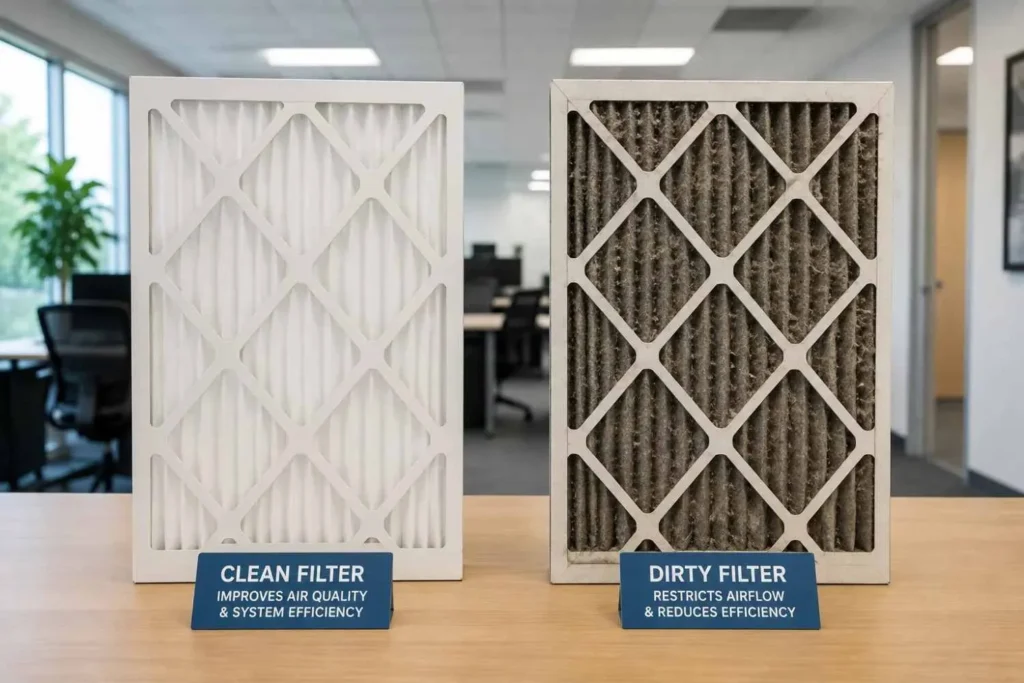
HVAC filters constantly remove particles from the air, and when they get clogged, the filter becomes less effective. Filters in heavily used commercial areas should be checked and replaced more frequently than standard recommendations suggest.
For Raleigh offices that run HVAC systems year-round through pollen season and humid months, filter replacement on a 30-day cycle rather than a 90-day cycle makes a measurable difference in how quickly dust returns after cleaning.
The Cleaning Methods That Actually Reduce Dust Build-Up
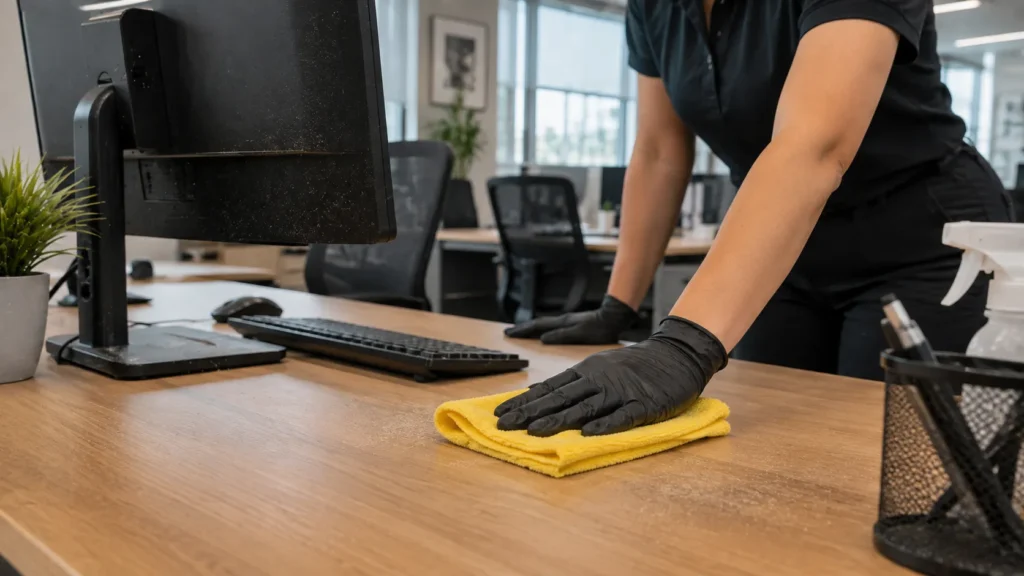
Microfiber Over Cotton Every Time
The tools used for dusting determine whether dust is removed or simply relocated. Cotton cloths and standard dusters push particles into the air where they resettle on nearby surfaces within minutes. Microfiber cloths trap particles electrostatically and hold them until the cloth is washed.
Microfiber contains tiny synthetic fibers that are highly effective at trapping dust particles. At about 100 times thinner than a human hair, microfiber cloths retain particles rather than pushing them around, making them significantly more effective than cotton alternatives.
For Raleigh offices with open-plan layouts where dust from one area quickly spreads to adjacent workstations, switching from cotton to microfiber for all surface wiping is one of the most impactful changes a cleaning routine can make.
Clean Top to Bottom, Every Time
Dust obeys gravity. Any cleaning routine that wipes desks before addressing ceiling fans, vents, and upper shelving is simply moving particles downward onto freshly cleaned surfaces. The correct sequence is always top to bottom: ceiling fans and high surfaces first, then workstations and furniture, then floors last.
This sequence sounds basic, but it is consistently skipped in office cleaning routines that were never specifically designed to address dust control. The result is a clean floor that collects a new layer of settled dust within hours of the cleaning team leaving.
Entrance Mats That Are Actually Maintained
A significant portion of the dust and particulate matter in any Raleigh office enters through the front door on the shoes and clothing of every person who walks in. Entrance floor mats capture a large percentage of this incoming material before it spreads into the workspace.
The problem is that mats reach saturation quickly, particularly during pollen season and in wet weather, and then become a source of particles rather than a barrier against them. Mats need to be vacuumed daily and deep cleaned weekly to function as intended. A mat that is not actively maintained is doing nothing.
Address the Break Room Separately
Break rooms generate airborne particles from food preparation, coffee brewing, and the general activity of high-frequency use throughout the day. Those particles travel into adjacent areas and settle on surfaces throughout the afternoon.
Break rooms need their own dedicated cleaning pass with food-safe cleaning products that address the specific type of residue generated there. Using the same cloth or mop that was used in the general office cross-contaminates both areas and reduces the effectiveness of the cleaning on both.
Schedule Professional Deep Cleaning Quarterly
Daily and weekly maintenance keeps a Raleigh office functional. It does not reach the areas where dust build-up accumulates over months. Air vents, ductwork grilles, ceiling fan blades, the tops of cabinets and storage units, and the undersides of desks and workstations all require a deeper clean on a quarterly schedule to prevent them from becoming persistent sources of airborne particles.
Dust can collect in hard-to-reach places. Just because you cannot easily get there does not mean dust will not settle, so neglecting even the smallest out-of-the-way areas allows the problem to compound steadily.
How Raleigh’s Pollen Season Changes the Equation
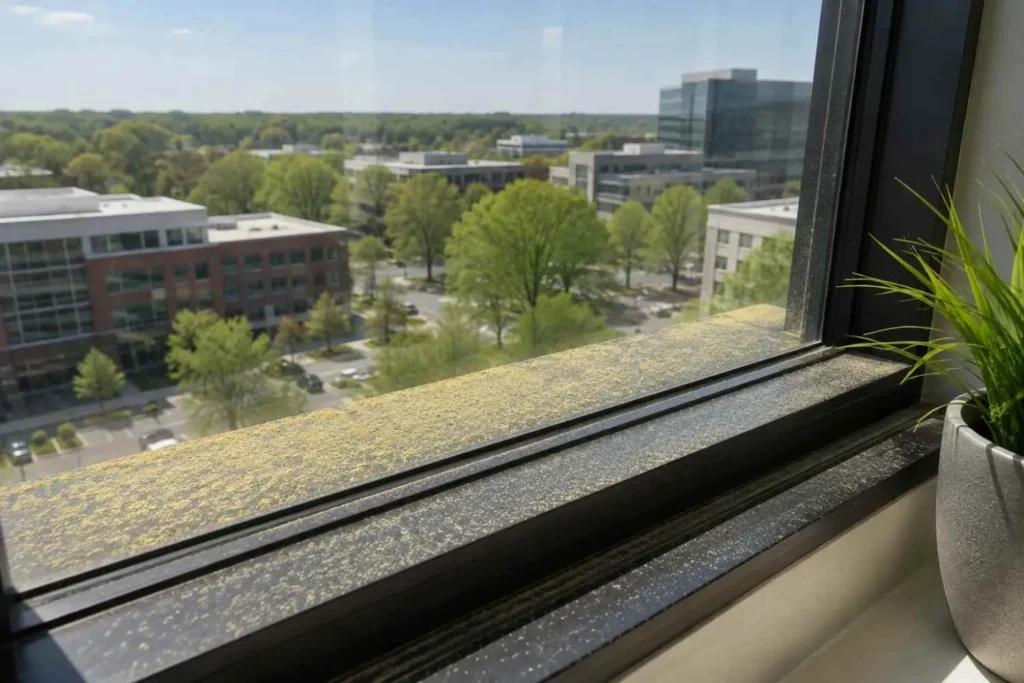
From March through May, Raleigh offices near tree-lined streets and green spaces, which includes most of Downtown Raleigh, North Hills, and Midtown, experience a significant spike in the rate at which surfaces accumulate visible particles.
During this period, the standard weekly cleaning cycle is not frequent enough to keep pace with the accumulation. Twice-weekly cleaning of high-accumulation surfaces, more frequent entrance mat maintenance, and mid-week attention to air vents and HVAC filters are the practical adjustments that keep offices looking and feeling clean through peak pollen months.
Office managers who stick to a standard year-round cleaning schedule through pollen season spend more time apologizing for dusty conference tables than those who adjust the routine seasonally.
What Smell Home Sweet Home Does Differently for Raleigh Offices
Smell Home Sweet Home provides commercial office cleaning services in Raleigh with a routine specifically designed around the local conditions that make dust accumulation a persistent challenge here.
Every visit uses microfiber cleaning systems for all surface work. The cleaning sequence runs top to bottom in every room. Air vents, ceiling fans, baseboards, and entrance mats are part of the standard routine, not quarterly extras. During pollen season, the team increases attention to high-accumulation surfaces without requiring a separate booking or a separate conversation.
For Raleigh offices that have noticed dust returning faster than it should, or that have had employee complaints about air quality and surface cleanliness, the issue is almost always the cleaning method rather than the cleaning frequency.
Call Smell Home Sweet Home at (877) 658-5887 or request a free quote online. Offices across Downtown Raleigh, North Hills, Brier Creek, and the Research Triangle corridor trust us to keep their workspaces genuinely clean, not just cleaned.
Frequently Asked Questions
Why does my Raleigh office get dusty so quickly after cleaning?
The most common reasons are a cleaning routine that does not address high-accumulation areas like air vents and ceiling fans, a clogged HVAC filter that redistributes particles through the system, and entrance mats that have reached saturation and are no longer capturing incoming debris.
How often should office air vents be cleaned in Raleigh?
For most Raleigh offices, air vent grilles should be wiped down monthly and inspected quarterly. During pollen season between March and May, monthly attention to both vents and HVAC filters makes a significant difference in how quickly dust returns after each cleaning visit.
What is the best tool for dusting office surfaces?
Microfiber cloths consistently outperform cotton cloths and standard dusters because they trap particles rather than pushing them into the air. Using microfiber for all surface work in an office is one of the most effective single changes a cleaning routine can make.
Does Raleigh’s humidity affect how dust behaves in offices?
Yes. Higher humidity causes airborne particles to carry more moisture, which makes them more likely to cling to surfaces when they settle rather than remaining loose and easy to vacuum. Offices cleaned during humid months may notice that surfaces feel slightly tacky and that particles adhere more firmly than they would in drier conditions.
Should office entrance mats be cleaned every day?
During Raleigh’s pollen season and in wet weather, yes. A floor mat that is not vacuumed daily quickly reaches the point where it redistributes particles rather than capturing them. Year-round, entrance mats should be vacuumed at every cleaning visit and deep cleaned at least once a week.
Leave a Reply