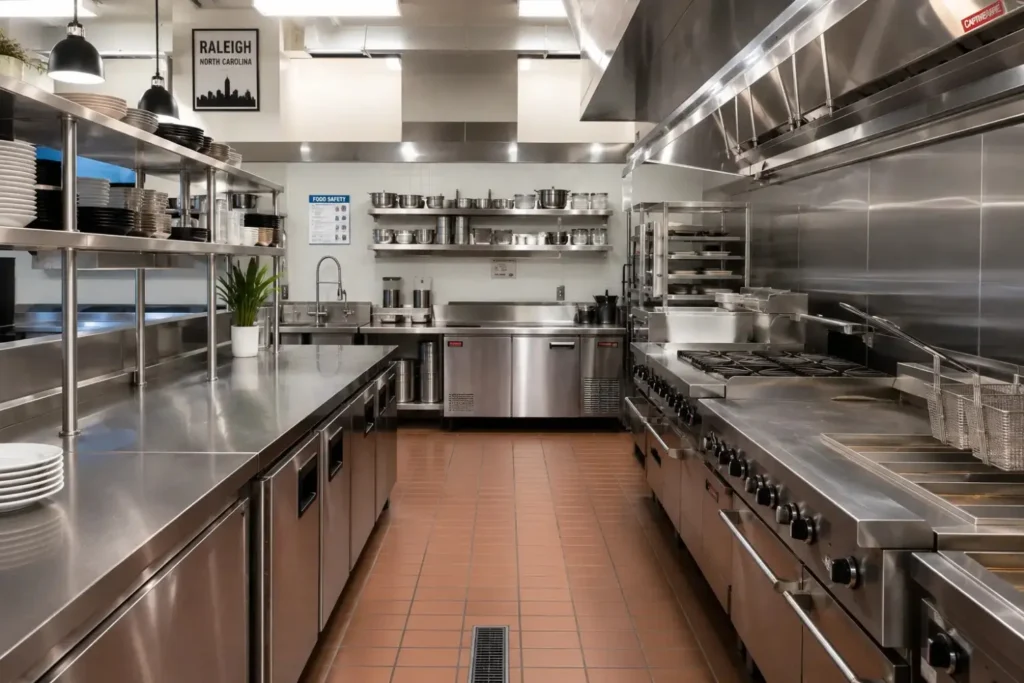
No Raleigh restaurant owner wants to see a B or C grade posted on their front door. Beyond the compliance pressure, that grade is public. Health inspection scores have a direct impact on customer trust and online visibility, and in Wake County, every report is publicly searchable by name and address.
The good news is that most violations are not random. They follow predictable patterns, and restaurants that understand those patterns stay out of trouble.
How Wake County Restaurant Inspections Work
Who Inspects and How Often
Restaurants in Wake County are inspected one to four times a year, depending on their menu items and food processes. A full-service restaurant with a complex menu gets inspected four times a year. A sandwich shop or push cart gets inspected twice. Grocery store delis and school lunch rooms are inspected three times a year.
Inspections are unannounced. Health inspectors look at everything from the way food is cooked, to how it is stored, to the general cleanliness of the restaurant in sessions that last anywhere from two to four hours depending on the complexity of the facility.
How NC Scores Work
North Carolina uses a numerical scoring system starting at 100. Facilities with an A have a score between 90 and 102, B grades have a score between 80 and 89.5, and C grades have a score between 70 and 79.5. If the score without the two-point education credit is less than 70 percent, the permit is revoked and the establishment is closed.
Any restaurant scoring below an A has the right to request a re-inspection within 15 days after correcting the violations. Persistent violations, however, lead to permit suspension and fines up to $1,000 per item under NC law.
What Inspectors Actually Focus On
Wake County’s Environmental Health Manager has described the five FDA risk factors inspectors concentrate on as approved source, employee hygiene, cleaning, sanitizing equipment, cold holding, and proper cooking temperatures.
Everything else in the inspection flows from those five categories. Understanding them is the foundation of staying compliant.
The Most Common Violations in Raleigh Restaurants
Improper Food Temperatures
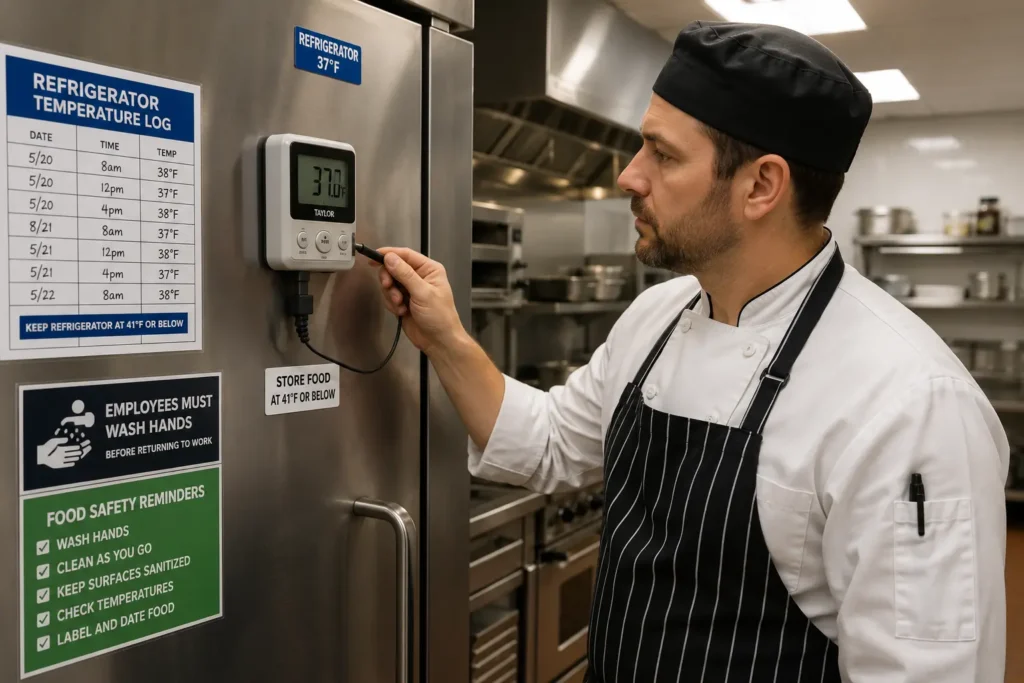
Temperature control is the single most consequential area in any inspection. Foods held in the danger zone between 41°F and 135°F allow foodborne pathogens like Salmonella, E. coli, and Listeria monocytogenes to multiply rapidly. Temperature abuse affected 18 percent of low scores in recent Wake County inspections, with restaurants storing foods improperly in the 41 to 135°F danger zone.
Walk-in coolers and refrigeration units need to be monitored with calibrated thermometers, not assumed. If a unit is running warm, the inspector finds it before you do.
Cross-Contamination
Cross-contact between raw meats and vegetables remains a stubborn 25 percent of deductions in Wake County inspections. Raw chicken stored above ready-to-eat foods, shared cutting boards between raw proteins and produce, and improper handling between tasks are the most cited examples.
Food-contact surfaces must be cleaned and sanitized between different food preparation tasks, not just at the end of a shift. This is a standard that gets documented as a violation far more often than it should.
Handwashing Failures
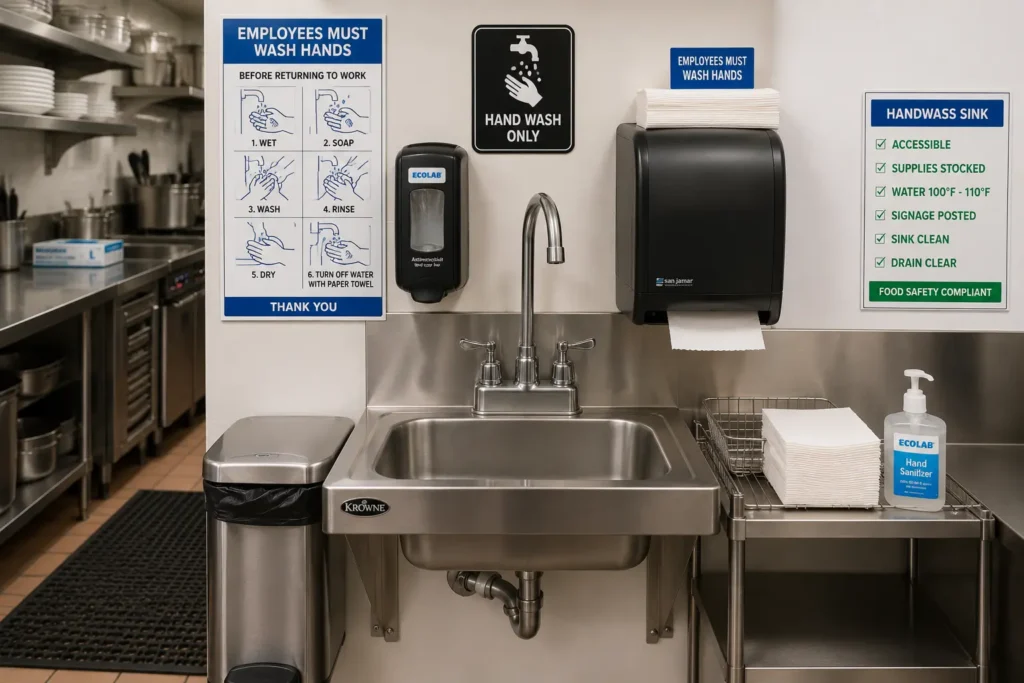
Handwashing lapses account for approximately 30 percent of violations in recent Raleigh area inspections. This covers employees not washing hands after handling raw protein, handwashing sinks being blocked or used for food prep, and gaps in employee health policy when staff come in sick.
A blocked handwashing sink is an automatic critical violation. Inspectors check accessibility every visit.
Dirty Food-Contact Surfaces and Equipment
Residue on surfaces that appear clean is one of the most common findings inspectors document. Dirty equipment, including residue on strainers and utensils marked as clean, is cited repeatedly in Wake County reports.
The issue here is often the difference between cleaning and sanitizing. Cleaning removes visible debris. Sanitizing kills the pathogens that remain after cleaning. Both steps are required on food-contact surfaces. A surface that was washed but not sanitized with an approved sanitizing solution at the correct concentration fails the inspection regardless of how clean it looks.
Grease Buildup and Dirty Exhaust Hoods
Grease accumulation inside the kitchen exhaust hood and ventilation system is a sanitation violation and a fire code issue simultaneously. Inspectors document it, and insurance carriers care about it independently of the health department.
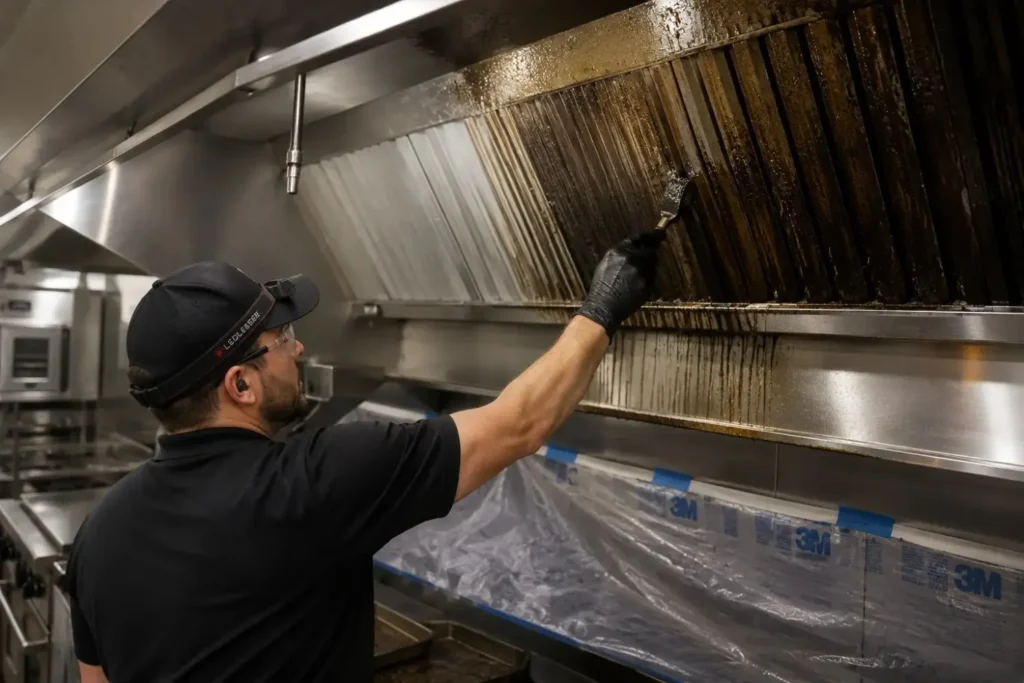
Hood cleaning frequency depends on cooking volume, but high-output kitchens in Raleigh typically require professional cleaning every one to three months. Grease that builds up in hood filters, exhaust fans, and ductwork does not get addressed by nightly kitchen cleaning routines.
Pest Evidence
Pest evidence including droppings and live insects appeared in approximately 15 percent of Triangle area inspections in recent reporting periods. Even a single documented instance of rodent activity is a serious violation. Inspectors check floor drains, dry storage areas, and spaces behind equipment specifically for pest indicators.
Preventing pest entry requires consistent grease trap maintenance, sealed floor drains, and eliminating the food debris that attracts pests in the first place.
Improper Food Storage and Labeling
Undated foods and cooked items held past their safe window are cited regularly in Wake County inspections. Every prepared food item in storage must be labeled with a preparation date and a use-by date. Inspectors look for this systematically, and missing labels cost points every time.
Dry storage areas need to keep food elevated off the floor, separated from cleaning chemicals, and organized by the type of food to prevent cross-contamination from drip or contact.
How to Keep Your Restaurant Inspection-Ready
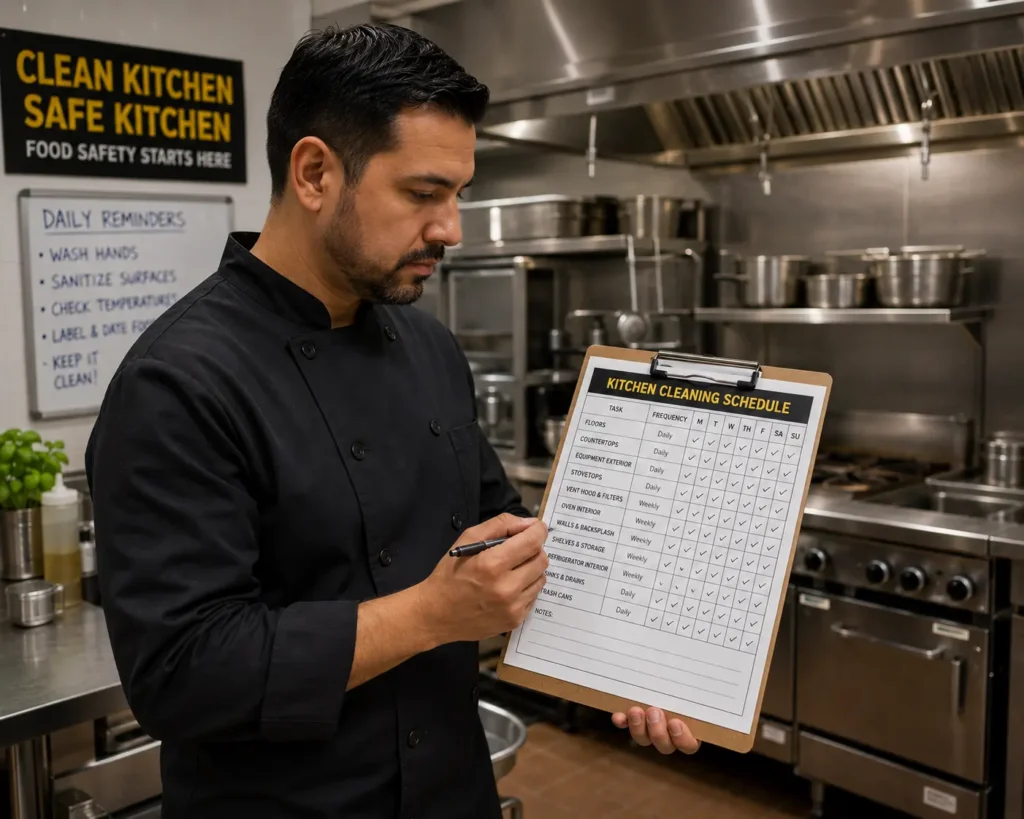
Build a Daily Cleaning Schedule
A written cleaning schedule with assigned tasks and completion checkboxes is the most practical tool a kitchen manager can implement. It creates accountability, creates a record, and ensures that daily, weekly, and monthly tasks are not skipped when the restaurant gets busy.
Daily tasks should include food-contact surface sanitization, handwashing station checks, temperature logs for all refrigeration units, and trash and drain cleaning. Weekly tasks add hood filter inspection, floor drain cleaning, and deep cleaning of cooking equipment. Monthly tasks cover a full review of all storage areas and pest prevention checks.
Train Staff on the Five Risk Factors
Violations do not only happen in the kitchen. They happen because an employee did not wash their hands, used the wrong cutting board, or let a cooler run at the wrong temperature for a shift without flagging it.
Staff who understand why handwashing, temperature control, and cross-contamination prevention matter are far more likely to catch issues before an inspector does. Training should be ongoing, not a one-time onboarding event.
Schedule Professional Deep Cleaning Alongside Your Routine
Nightly kitchen cleaning keeps a restaurant functional. It does not reach the areas that accumulate over weeks and months. Grease buildup behind and under equipment, inside hood systems, inside ice machines, and along floor drains requires professional equipment and cleaning methods that a kitchen crew cannot replicate at the end of a service.
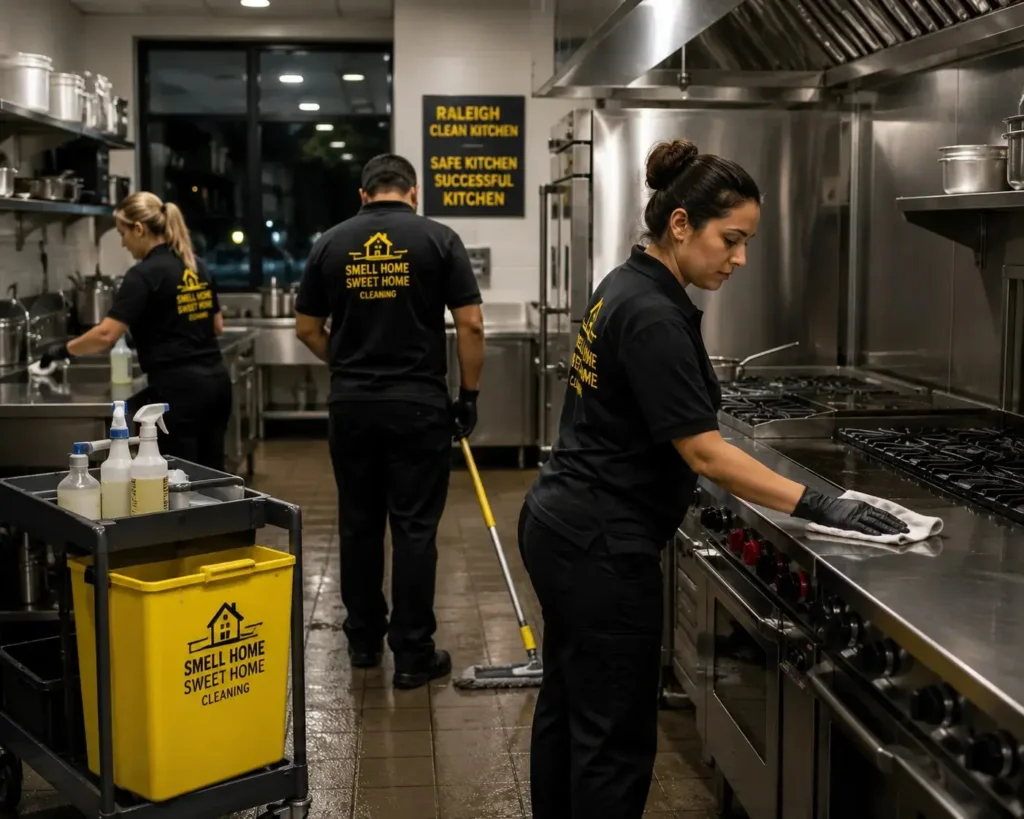
Smell Home Sweet Home provides restaurant cleaning services in Raleigh for exactly this purpose. The team handles the areas that kitchen staff physically cannot reach during service, including deep hood degreasing, equipment cleaning, drain maintenance, and full kitchen sanitation to food service standards. A scheduled professional clean keeps restaurants consistently above the threshold that matters, an A grade on every inspection.
Call Smell Home Sweet Home at (877) 658-5887 or request a free quote online before your next Wake County inspection cycle.
Frequently Asked Questions
How often are Raleigh restaurants inspected?
Restaurants in Wake County are inspected one to four times per year depending on their menu complexity and food processes. Full-service restaurants with complex menus are inspected four times annually.
What is a passing score for a restaurant health inspection in NC?
An A is anywhere from 100 to 90, a B rating runs from 89 to 80, and a C rating runs from 79 to 70. Anything below a C requires immediate closure.
What are the most common violations in Wake County?
Based on recent inspection data, the most frequent violations involve handwashing failures, cross-contamination between raw proteins and ready-to-eat foods, improper food temperature control, residue on food-contact surfaces, and pest evidence.
Can a restaurant be closed on the spot?
Yes. Inspectors will close restaurants for losing power, losing water, sewerage backup, fires, or for scoring below 70 without the education credit. Critical violations that pose an immediate foodborne illness risk must be corrected before the inspector leaves the premises.
What is the difference between cleaning and sanitizing?
Cleaning removes visible food debris, grease, and residue from surfaces. Sanitizing applies a food-safe sanitizer at the correct concentration and contact time to kill pathogens that remain after cleaning. Both steps are required on food-contact surfaces under the North Carolina Food Code. Doing one without the other does not meet the standard.
Where can I find Wake County restaurant inspection reports?
All reports are publicly available through the Wake County Environmental Services online portal. You can search by restaurant name or ZIP code to view current and historical inspection scores and violation details.
Leave a Reply