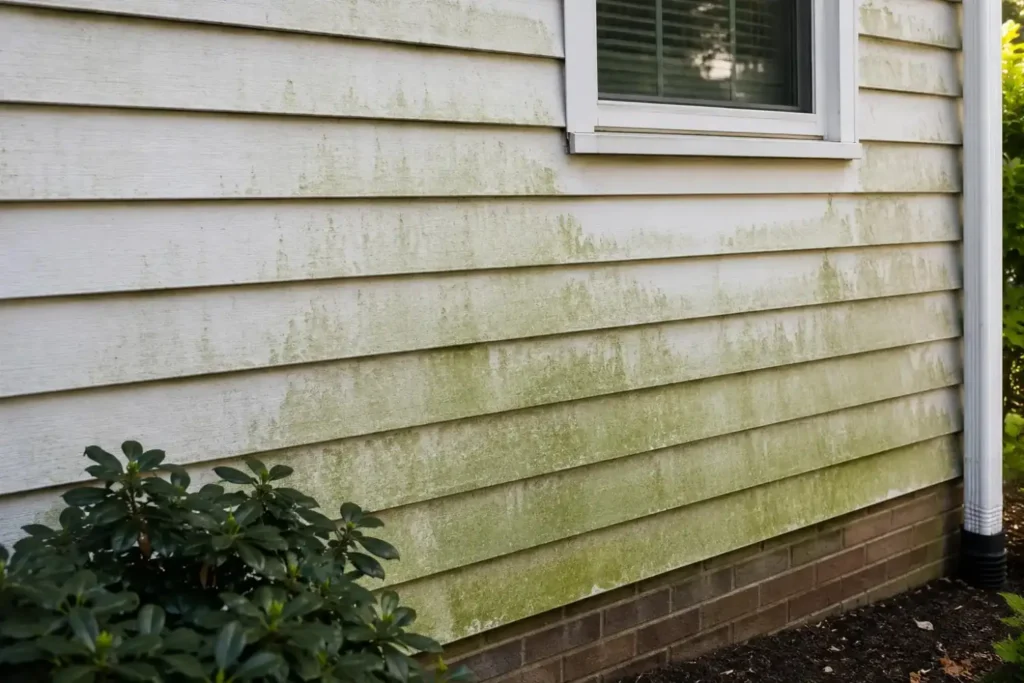
Algae growth is common on Raleigh homes because of the city’s high humidity, warm temperatures, and heavy tree canopy, which keep exterior surfaces damp long enough for algae spores to take hold. North-facing walls and roofs are typically affected first. Green algae grows on siding and concrete, while dark streaking on roofs is caused by a cyanobacterium called Gloeocapsa magma that degrades asphalt shingles over time.
You notice it gradually. A faint green tint on the north side of the house. Dark streaks running down the roof shingles. A slick film on the driveway that was not there six months ago.
What Raleigh’s Climate Does to Home Exteriors
Algae on home exteriors is one of the most common complaints among Raleigh homeowners, and it is not random. The conditions in this part of North Carolina make algae growth almost inevitable if exterior surfaces are left untreated for more than a season or two.
Humidity Is the Primary Driver
Raleigh sits in a humid subtropical climate zone. Average humidity levels stay above 70 percent for much of the year, and the months between April and September bring consistent warmth and moisture together at the same time. That combination is precisely what algae needs to establish itself on any surface it lands on.
Algae does not need soil or nutrients to survive on your siding or roof. It feeds on moisture alone. As long as a surface stays damp long enough after rain or dew, algae spores can attach and begin growing within days.
Warm Temperatures Accelerate the Cycle
Raleigh’s average summer temperatures regularly sit in the high 80s and low 90s. Those temperatures, combined with humidity, create conditions that push algae growth from a slow creep into a visible problem within a single season.
Spring is the most aggressive period. April and May rainfall keeps exterior surfaces wet for extended stretches, and rising temperatures then accelerate what the moisture started. By the time summer arrives, the growth that took hold in spring is already well established.
Why Certain Parts of Your Home Are Affected First
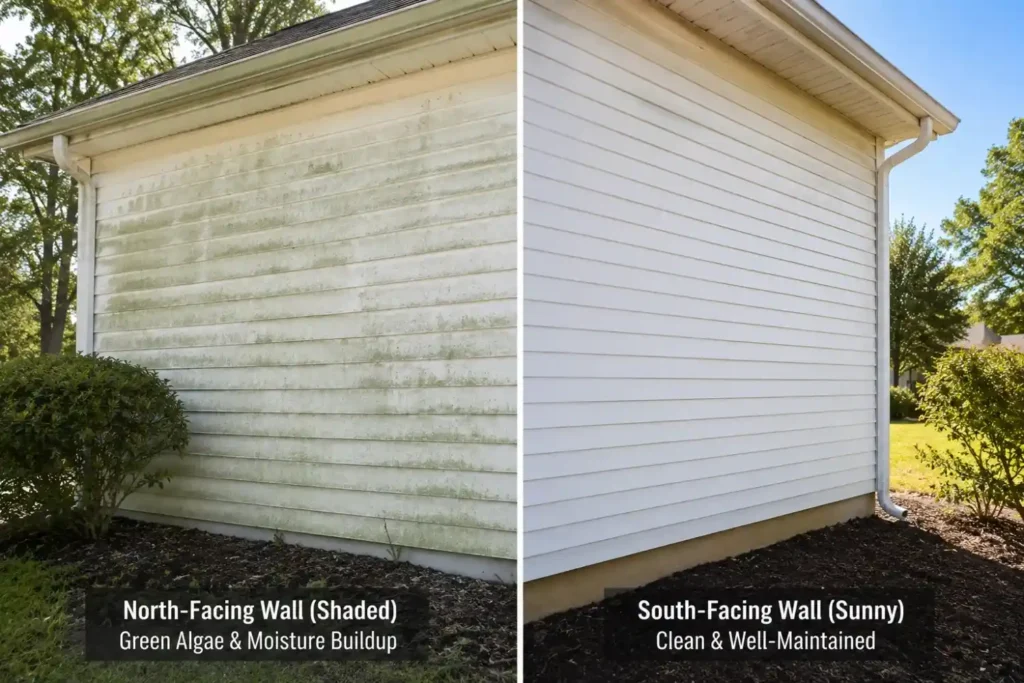
North-Facing Walls and Surfaces
The north side of a Raleigh home receives little to no direct sunlight for most of the day. Sunlight dries surfaces naturally after rain. Without it, north-facing siding, trim, and concrete stay damp far longer than south-facing surfaces, and that extended moisture is what algae exploits first.
This is why homeowners almost always notice growth on the north side of the house before they see it anywhere else. By the time it becomes visible on south-facing walls, the north side has typically been hosting growth for months.
Tree Canopy and Shade Patterns

Raleigh’s mature tree canopy is one of the things that makes the city genuinely beautiful. It is also one of the reasons algae is so persistent here. Trees block sunlight, which extends the time exterior surfaces stay damp after rain. They also deposit organic material, pollen, leaf debris, and moisture onto roofs and siding, which gives algae an additional foothold.
Neighborhoods with heavy tree cover, including many areas of North Raleigh, Midtown, and older sections near Five Points and Boylan Heights, experience more consistent algae growth than newer developments with less shade.
The Two Types of Algae Raleigh Homeowners See
Green Algae on Siding and Concrete
Green algae is the bright green or greenish-brown film that forms on vinyl siding, fences, concrete driveways, and walkways. It grows wherever shade and moisture combine and sits on the surface rather than penetrating it.
Left alone, green algae spreads across the surface, holds moisture against the material, and creates the conditions for mold and mildew to take root behind it.
Black Streaks on Roofs

The dark streaking that runs down asphalt shingles is not dirt or mildew. It is a cyanobacterium called Gloeocapsa magma, often referred to as blue-green algae. It produces a dark pigmented sheath to protect itself from UV rays, which is what creates the visible black streaking.
Gloeocapsa magma feeds on the limestone filler in asphalt shingles and degrades them over time. On energy-efficient or reflective roofing systems, it also reduces the roof’s ability to reflect sunlight, which increases cooling costs.
What Happens When It Is Left Untreated
Algae growth that goes unaddressed for a full season or longer creates a layered problem.
- Green algae holds moisture against siding, which leads to mold growth behind the surface on wood-framed homes.
- On vinyl and fiber cement siding, persistent moisture causes staining that becomes permanent if not removed within a reasonable window.
- Roof algae degrades shingles progressively and can void manufacturer warranties on some roofing systems.
- Driveways and walkways covered in algae become slick and create a slip hazard, particularly after rain.
The longer it sits, the harder and more expensive it becomes to remove.
What Actually Removes It and Why Pressure Washing Alone Is Not Enough
Pressure washing removes surface-level algae but does not kill the spores embedded in the surface. Within a few weeks, regrowth begins from the same location.
Soft washing, which uses low pressure combined with a cleaning solution formulated to kill algae at the biological level, removes the visible growth and addresses the spores underneath. The result lasts significantly longer than pressure washing alone.
How Smell Home Sweet Home Helps Raleigh Homeowners Stay Ahead of It
Smell Home Sweet Home provides exterior cleaning services for Raleigh homeowners dealing with algae on siding, roofs, driveways, and walkways. The approach is tailored to the surface being cleaned because vinyl siding, concrete, and asphalt shingles each require a different method to avoid damage while achieving a full clean.
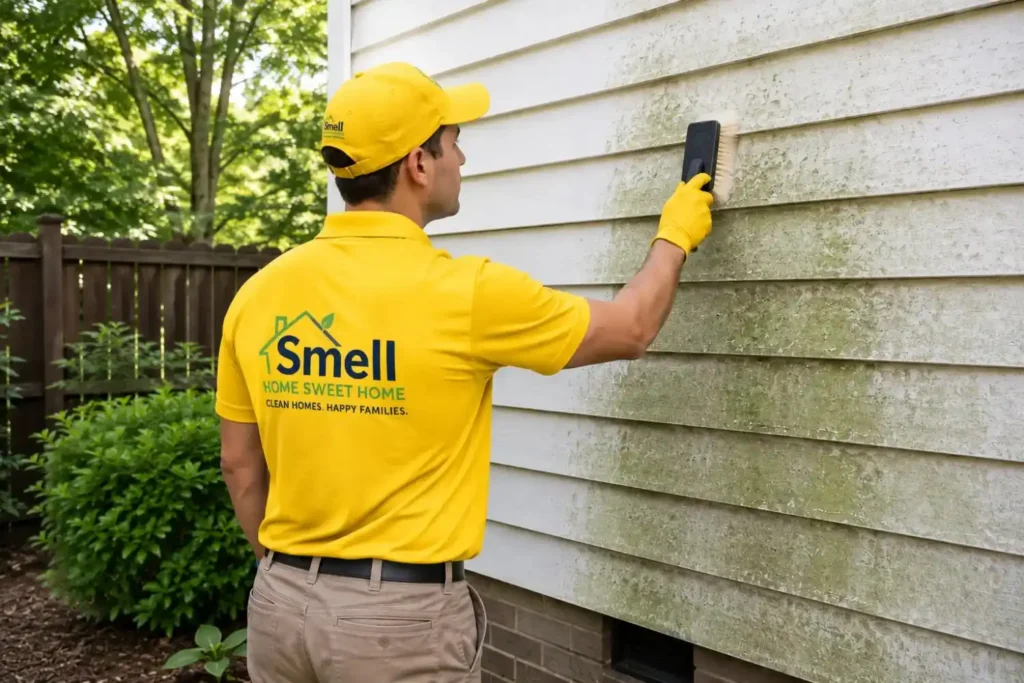
For Raleigh homes in heavily shaded neighborhoods or those with older roofs and north-facing siding, a single treatment followed by a scheduled annual or biannual cleaning is the most effective way to keep algae from returning to a visible level.
If your home has algae on any exterior surface, call Smell Home Sweet Home at (877) 658-5887 or get a free quote online before the next heavy rain season gives it another season to spread.
Frequently Asked Questions
Why does algae keep coming back after I clean it?
If only the visible growth is removed without treating the underlying spores, algae regrows from the same surface within weeks. A cleaning solution that kills the organism at the biological level is the only way to extend the time between regrowth.
Is algae on my roof actually damaging the shingles?
The black streaking caused by Gloeocapsa magma degrades the limestone filler in asphalt shingles over time. It also reduces the reflective efficiency of energy-efficient roofing systems, which increases cooling costs.
Which side of the house gets algae first?
North-facing walls and surfaces almost always show growth first because they receive the least direct sunlight and stay damp the longest after rain.
How often should Raleigh homeowners have their exterior cleaned?
For homes with significant tree canopy or persistent north-side shade, once a year is the standard recommendation. Homes with less shade exposure can often go every 18 to 24 months between professional cleanings.
Leave a Reply